How to Register a Spices Export Business in India 2026: Complete Guide by Experts
How to start a spices export business in India 2026. Spice export business registration, license, IEC, Spices Board CRES, FSSAI, APEDA, real timelines.

Documents Required
- PAN card of the proposed directors
- Aadhaar card of the proposed directors
- Passport-size photographs of the directors
- Registered office address proof (electricity bill, NOC from owner)
- Bank account details for the entity
- Spice processing or storage premise layout plan (for FSSAI)
Tools & Prerequisites
- MCA V3 portal access
- Class 3 Digital Signature Certificate (DSC)
- Director Identification Number (DIN)
- DGFT portal account (for IEC)
- Spices Board CRES portal account
- FSSAI FoSCoS portal account
- APEDA portal account
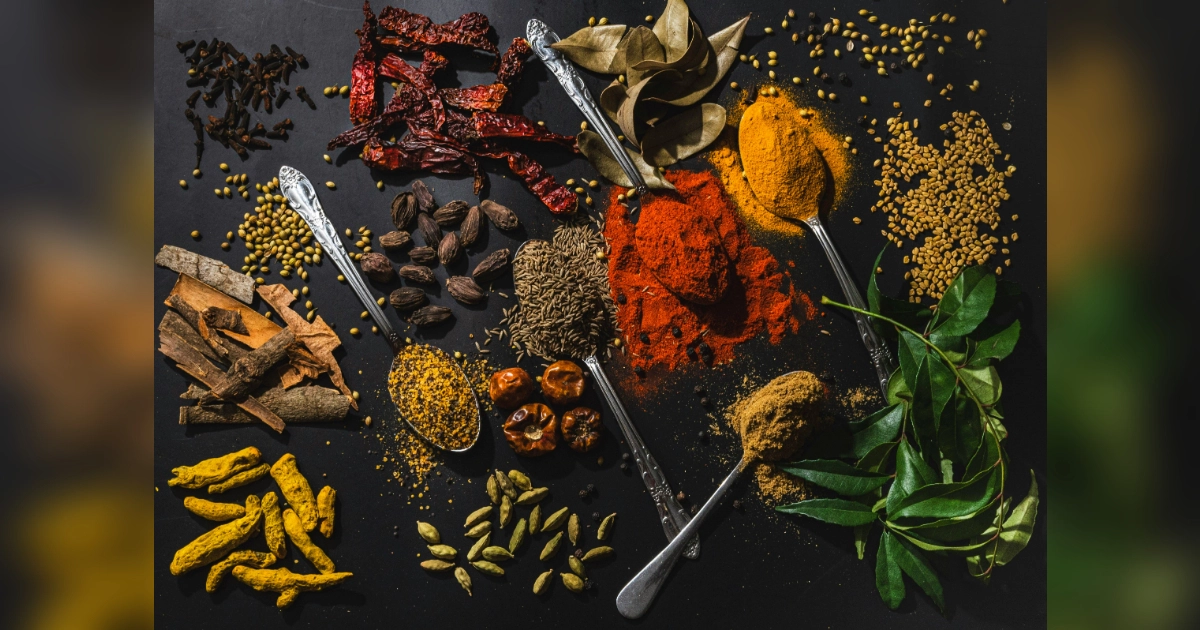
India is the world's largest producer and exporter of spices, with nearly 70% of global production and over USD 4.5 billion in 2026 exports to 180+ countries. For anyone planning a spice export business in India, the market opportunity is real, and a first-time exporter can earn a healthy margin on a single 20-foot container.
Spices export business registration is a multi-step process. Mandatory registrations include company registration with the MCA, GST and LUT, the Import Export Code (IEC), the Spices Board CRES, an FSSAI Central Licence, and APEDA for processed spices.
What Does a Spice Export Business in India Do?
A spice export business in India sources spices from Indian growers, mandis, and processing units, applies food-safety standards, completes export documentation, and ships consignments to overseas buyers. The three common operating models are:
- Merchant exporter: sources finished spices from third-party processors and ships under own brand. Lowest capex; ideal for first-time exporters.
- Manufacturer exporter: owns the processing, grading, and packaging unit. Higher capex but better margins.
- Trader-cum-exporter: does both domestic trade and exports through one entity.
Why Start a Spice Export Business in India in 2026?
The Indian spice export sector grew at over 11% CAGR between 2020 and 2025, with exports projected to cross Rs. 37,000 crore in 2026. India produces 52 notified spices under the Spices Board Act, 1986, including pepper, cardamom, chilli, turmeric, ginger, cumin, coriander, fennel, fenugreek, nutmeg, mace, cinnamon, cloves, and saffron. Top buyer markets are the USA, UAE, China, Bangladesh, UK, Saudi Arabia, Vietnam, Germany, and Canada. A first-time exporter can typically earn Rs. 12 to 18 lakh net margin per 20-foot container on high-demand spices like cardamom, turmeric powder, and dehydrated chilli powder.
What Licenses Are Required for a Spice Export Business in India?
The licenses required for spice export business in India are a multi-registration stack covering entity, tax, customs, food safety, and spice-specific compliance. Most can be filed in parallel, which is why total setup time is 30 to 60 working days, not 30 to 60 sequential days. The table below is the complete list for a spices export business registration in 2026.
| Registration / Licence | Authority | Typical Fee | Validity |
|---|---|---|---|
| Company registration (Pvt Ltd / LLP / OPC) | MCA | Rs. 6,000 to Rs. 16,000 | Perpetual |
| PAN and TAN | Income Tax Dept. | Rs. 143 (combined) | Perpetual |
| GST Registration | CBIC | Nil (govt) + professional fee | Perpetual |
| GST LUT (Form RFD-11) | CBIC | Nil | 1 financial year |
| Import Export Code (IEC) | DGFT | Rs. 500 (govt fee) | Lifetime (annual update) |
| Spices Board CRES | Spices Board (Min. of Commerce) | Rs. 5,000 + 18% GST (merchant and manufacturer) | 3 years |
| FSSAI Central Licence | FSSAI | Rs. 7,500 + 18% GST per year | 1 to 5 years |
| APEDA RCMC | APEDA (Min. of Commerce) | Rs. 5,000 + GST | 5 years |
How to Choose the Right Business Structure for Spice Export Company Registration
For spice export company registration, the choice of business structure determines tax treatment, bank facility limits, compliance load, and credibility with international buyers. The five options under Indian law are:
- Private Limited Company (Pvt Ltd): the most common structure for spice exporters. Offers limited liability, perpetual succession, easy fundraising, and the strongest credibility with overseas buyers and banks. 2 to 200 shareholders allowed.
- LLP (Limited Liability Partnership): a popular alternative for two or more partners. Lower compliance than Pvt Ltd but slightly lower credibility with large international buyers.
- One Person Company (OPC): suitable for solo spice exporters. Limited fundraising, but a clean route for single-founder operations.
- Partnership Firm: simple to set up but no limited liability and very limited credibility with foreign buyers.
- Sole Proprietorship: easiest to set up but personal liability is unlimited. Not recommended for any serious export operation.
How to Register a Spice Export Business in India: Step-by-Step
The spice export business registration process for a Private Limited Company follows the standard SPICe+ route on the MCA V3 portal. If you are researching how to start spices export business in India, the right starting point is incorporating your company under the SPICe+ form. The steps below cover the first phase (company registration). Subsequent steps (GST, IEC, Spices Board CRES, FSSAI, APEDA) are covered in the next sections.
- Apply for Digital Signature Certificate (DSC): Every proposed director, shareholder, and the nominee (in OPC) needs a Class 3 DSC. Cost is Rs. 2,000 per DSC, valid 2 years.
- Reserve the company name: Use SPICe+ Part A on the MCA V3 portal. Submit 2 proposed names. Names with words like "spice", "exports", "international", "trading", "global" are commonly used.
- Prepare SPICe+ Part B and supporting documents: Includes MOA, AOA, AGILE-PRO-S (GST, EPF, ESI, bank account integration), and DIR-12 (director consent). The Director Identification Number (DIN) is allotted automatically as part of SPICe+ Part B for first-time directors, so no separate DIN application is required. Add the relevant NIC codes (01281 to 01289 for spice farming/production, 46309 for food wholesale, 47213 for retail).
- Submit the application on MCA V3: The DSC of every proposed director and shareholder must be affixed to every form. Government fee plus stamp duty is paid at submission. PAN and TAN are added at Rs. 143 combined.
- MCA review and approval: The Registrar of Companies (ROC) reviews the application. In normal conditions in 2026, approval takes 7 to 10 working days.
- Receive Certificate of Incorporation: On approval, the Certificate of Incorporation, CIN, PAN, and TAN are issued. Open a current account immediately, and begin filing for GST, IEC, CRES, FSSAI, and APEDA in parallel.
Spices Board CRES Registration Process: Step-by-Step
The spices board CRES registration process, formally known as spices board registration, is mandatory for any business exporting any of the 52 notified spices under the Spices Board Act, 1986. CRES stands for Certificate of Registration as Exporter of Spices, and is issued by the Spices Board (an autonomous body under the Ministry of Commerce and Industry). The process is fully online on the Spices Board portal at indianspices.com.
- Register on the CRES portal at the Spices Board website. Use your company PAN and IEC as primary identifiers.
- Fill the CRES application form with company details, list of spices to be exported (against the 52 notified spices), and export trade plan.
- Upload supporting documents: Certificate of Incorporation, PAN of the company, IEC certificate, GST certificate, bank certificate or cancelled cheque, sample lab analysis reports (where applicable), and registered office address proof.
- Pay the registration fee: Rs. 5,000 + 18% GST = Rs. 5,900, applicable to both merchant and manufacturer exporters (valid 3 years). Renewal fee is the same.
- Spices Board review: The application is reviewed by the regional Spices Board office.
- CRES certificate is issued digitally to the registered email and downloadable from the portal. Typical timeline is 5 to 10 working days from complete submission.
- Compliance: Submit quarterly export returns to the Spices Board through the same portal. Non-compliance can lead to CRES suspension and ineligibility for export incentives.
Real-World Approval Timelines: What to Expect in Mid-2026
Official timelines and real-world timelines are not always the same. Based on our experience handling spices export business registration in 2026, here is what the actual approval landscape looks like for each registration:
| Registration | Official Timeline | Real Timeline (as per our experience) | Approval Difficulty |
|---|---|---|---|
| Import Export Code (IEC) | Immediate (online) | Immediate to 1 working day | Easy, straight-through |
| APEDA RCMC | 3 to 5 working days | 5 to 8 working days | Easy, mostly straight-through |
| GST Registration + LUT | 3 working days | 3 to 7 working days | Easy |
| Spices Board CRES | 7 working days | 5 to 10 working days | Moderate |
| FSSAI Central Licence | 30 working days | 30 to 60 working days | Hardest, queries common |
| Company Registration (MCA) | 7 to 10 working days | 10 to 18 working days (June 2026 delay) | Easy (but currently delayed) |
In plain terms: APEDA is the easiest approval in the stack, generally straight-through and rarely queried. IEC is the simplest of all and is issued immediately on submission of a valid application. FSSAI takes the longest because the Central Licence approval is rarely straight-through; expect queries on the layout plan, food safety management plan, water test reports, or NOC from the local authority. Company registration with the MCA has been streamlined significantly with the MCA V3 portal updates earlier in 2026, and is normally a 7 to 10 day approval.
Cardamom Export Business: How to Get Started
The cardamom export business is one of the highest-margin verticals in Indian spice exports. India is the second-largest cardamom producer globally, with Kerala (Idukki, Wayanad) and Tamil Nadu (Bodinayakanur) as the main sourcing regions. The Spices Board operates two licensed e-auction centres for small cardamom (Bodinayakanur and Puttady). To start a cardamom export business, complete the standard export stack, register for the Spices Board e-auction system, and arrange Halal certification, since Saudi Arabia, UAE, Kuwait, and Qatar together buy over 60% of Indian cardamom exports. Premium 8mm bold green cardamom earns Rs. 12 to 18 lakh net margin per 20-foot container.
Pepper Export Business: How to Get Started
The pepper export business is one of the largest Indian spice export segments, with India producing premium grades like Tellicherry Extra Bold, Malabar Garbled, and Wynaad. Kerala (Idukki, Wayanad), Karnataka (Kodagu), and Tamil Nadu are the main sourcing regions. Top buyer markets are the USA, Germany, UK, UAE, and Vietnam. To start a pepper export business, complete the standard export stack, run pesticide MRL testing on every EU-bound consignment (EU pepper MRLs were tightened in 2024), and register for the Spices Board's Quality Upgradation Scheme (25-50% subsidies on cleaning, grading, and steam-sterilisation equipment).
Turmeric Export Business: How to Get Started
The turmeric export business has strong momentum since GI protection for Erode, Sangli, and Lakadong (Meghalaya) varieties. India produces nearly 80% of global turmeric. Erode and Salem (Tamil Nadu), Sangli (Maharashtra), Nizamabad (Telangana), and Cuddapah (Andhra Pradesh) are the main sourcing regions. Top buyer markets are the USA, UAE, Iran, Bangladesh, and the UK. To start a turmeric export business, complete the standard export stack, ensure curcumin content (3-5% for export grades) is tested by a NABL lab, and consider value-added products like turmeric powder and curcumin extracts which fetch much higher margins than raw fingers.
How to Export Spices to USA from India
One of the most common questions we get is how to export spices from India to specific destination markets. The compliance set is identical at the Indian end, but the destination country adds its own food-safety and labelling rules on top. This section and the next cover the two largest buyers of Indian spices: the USA and the UAE.
To export spices to USA from India, an Indian spice exporter must comply with both Indian export rules and US FDA regulations. The USA is the largest single buyer of Indian spices, with the USA-India spice trade exceeding USD 700 million annually. After completing the standard Indian export stack, the following additional US-side compliances apply:
- FDA Food Facility Registration: Every Indian processing facility shipping food to the US must register with the FDA under Section 415 of the FD&C Act. Registration is free, renewed biennially.
- US Agent: A US-based person (an individual or company) must be appointed as the FDA point of contact. Many freight forwarders offer this service.
- Prior Notice: File Prior Notice with the FDA for every shipment before arrival at the US port. Failure to file means shipment refusal.
- FSMA compliance: The Food Safety Modernization Act includes the FSVP rule (Foreign Supplier Verification Programs). The US importer must verify the Indian supplier's food-safety programme.
- Labelling: US labelling must be in English, with net weight in US units, country of origin (India), nutrition facts panel (where applicable), and lot/batch number.
- Lab testing: Pesticide residues, aflatoxins, Salmonella, and heavy metals must be tested by a NABL or US-accredited lab. The FDA Import Alert 99-19 (red list) covers Indian spice consignments rejected for Salmonella; aim for zero rejections to avoid getting onto the import alert.
How to Export Spices to Dubai from India (UAE Market)
To export spices to Dubai from India, the UAE-side compliance is significantly less burdensome than the US, but still has specific requirements. The UAE is the second-largest buyer of Indian spices, particularly cardamom, pepper, chilli, and turmeric. The main entry points are Jebel Ali Port (Dubai) and Khalifa Port (Abu Dhabi).
- UAE Importer Licence: Appoint a UAE-based importer with a valid Dubai Municipality trade licence and food import permit.
- Dubai Municipality / FoodWatch label approval: Product labels must be approved through the FoodWatch system before the first shipment.
- Halal Certification: While not always mandatory for raw spices, Halal certification from an ESMA (Emirates Authority for Standardization and Metrology)-recognised certifying body in India is strongly recommended for any value-added or processed spice product.
- Arabic Labelling: Labels must include Arabic translation of product name, ingredients, expiry date, batch number, country of origin (India), and importer details.
- UAE.S/GSO standards: The Gulf Standards Organization (GSO) issues product-specific standards for spices that must be met.
- Gulfood Dubai: Attending Gulfood (held annually in February at the Dubai World Trade Centre) is the fastest route to UAE and broader Gulf buyers.
Can I Start a Spice Export Business with Low Investment in India?
Yes. The merchant exporter route is the common low-investment path. You do not own a processing or storage facility; you source finished, packed, and certified spices from third-party manufacturers (registered FSSAI Central licensees) and ship them under your own brand. Realistic minimum investment is Rs. 1 to 6 lakh:
- Company registration and government fees: Rs. 5,000 to Rs. 16,000 (varies as per state)
- All licences (IEC, GST, CRES, FSSAI, APEDA): Rs. 22,000 to Rs. 27,000
- Working capital for first shipments and freight: Rs. 50,000 to Rs. 5 lakh
- Lab testing, packaging, and trade-fair fees: Rs. 30,000 to Rs. 1 lakh
Banks offer packing credit against confirmed export orders (typically 80% of FOB value) at concessional rates, which reduces upfront cash needed. LC-based exports also reduce buyer-default risk.
What is the Total Cost of Starting a Spice Export Business in India?
The end-to-end cost of starting a spice export business in India in 2026, including government fees, professional fees, and basic working capital for the first shipment, breaks down as follows:
| Cost Component | Indicative Range (INR) |
|---|---|
| Company registration (Pvt Ltd including stamp duty) | Rs. 5,000 to Rs. 16,000 (state-dependent) |
| DSC for directors (Class 3, 2 to 3 directors) | Rs. 4,000 to Rs. 6,000 (Rs. 2,000 per DSC) |
| PAN, TAN, GST registration, LUT filing | Rs. 1,500 to Rs. 2,000 (professional fees) |
| Import Export Code (IEC) | Rs. 500 (govt) + professional fee |
| Spices Board CRES (merchant and manufacturer, 3 years) | Rs. 5,900 (Rs. 5,000 + 18% GST) |
| FSSAI Central Licence (per year) | Rs. 7,500 + 18% GST (govt) + professional fee |
| APEDA RCMC (5 years validity) | Rs. 5,900 (incl. GST) |
| ICEGATE registration | Nil (govt) + professional fee |
| Working capital for first 1 to 2 shipments | Rs. 50,000 to Rs. 5 lakh |
For detailed cost breakdowns of the company registration component itself, please refer to our dedicated Company Registration Cost in India 2026 guide.
How to Find International Buyers for Your Spice Export Business
Finding the right international buyers is often the hardest part of building a spice export business in India, harder than completing the registrations. The most reliable channels we have seen work for new spice exporters in 2026:
- International trade fairs: Gulfood (Dubai, February), Anuga (Cologne, October), SIAL (Paris, October), World Spice Congress (India, biennial). The Spices Board subsidises participation through the Market Development Assistance scheme.
- B2B trade portals: Alibaba, IndiaMART, ExportersIndia, TradeIndia, and Global Sources. Verify all overseas buyer credentials before signing contracts.
- Indian embassy commercial wings: ITPO and Indian missions abroad publish buyer enquiries through the Spices Board newsletter.
- APEDA buyer-seller meets: APEDA organises buyer-seller meets across continents, a high-conversion channel.
- RCMC member directories: The Spices Board and APEDA publish exporter and overseas-importer directories; these can be cross-referenced for warm introductions.
- LinkedIn outreach: Direct outreach to procurement heads at large food companies in the destination country. Higher hit-rate than cold email.
What Are the Common Mistakes New Spice Exporters Make?
- Skipping the LUT filing: Without LUT, the exporter must pay IGST upfront and claim a refund, which severely affects working capital.
- Underestimating FSSAI timelines: The FSSAI Central Licence is the longest registration. Start the FSSAI application on Day 1, in parallel with company registration.
- Shipping without pre-shipment lab testing: Aflatoxin, Salmonella, pesticide MRL, and Sudan dye failures can lead to consignment destruction. Test before shipping, not after rejection.
- Working with unverified overseas buyers: Insist on Letter of Credit (LC) confirmed by a first-class bank for the first 2 to 3 shipments. Trade references from at least 2 existing exporters are mandatory.
- Wrong HSN code on shipping bill: Causes customs delays and export-incentive denial. Pepper is 0904, cardamom is 0908, turmeric is 0910, cumin is 0909.
- Missing Spices Board CRES quarterly returns: Non-filing can lead to CRES suspension and ineligibility for export incentives.
- Ignoring destination-country compliance: US FDA Prior Notice, Dubai Municipality FoodWatch, EU MRL. Each market has its own rules that must be checked before shipping.
Conclusion
Starting a spice export business in India in 2026 is one of the more attractive opportunities in Indian export trade. The market is large, the margins are real, and the regulatory framework, while multi-step, is well-defined and largely digital. Get the spices export business registration right in the right sequence (company → GST/LUT → IEC → CRES → FSSAI → APEDA), and the rest of the export journey, finding buyers, building margins, scaling to multiple containers, becomes a much smoother climb. If you are reading this in June 2026, factor in the slight MCA delay due to the recent server fire incident, and start your filings in parallel rather than sequentially.
Frequently Asked Questions
What are the licenses required for a spice export business in India?
How to start a spices export business in India in 2026?
What is the spices board CRES registration process?
How to export spices to USA from India?
How to export spices to Dubai from India?
What is the spice export license in India and how much does it cost?
How long does APEDA registration take for a spice exporter in 2026?
How long does FSSAI Central Licence take for a spice exporter in 2026?
How long does IEC registration take in 2026?
How long does company registration take in India in 2026 for a spice export business?
What is the cardamom export business about and how do I get started?
What is the pepper export business about and how do I get started?
What is the turmeric export business about and how do I get started?
Do I need a private limited company for a spice export business in India?
Can I export spices from India without GST registration?
What is the minimum investment to start a spice export business in India?
Need Help With This Process?
Our experts are ready to assist you every step of the way. Get started with a free consultation today!




 Ashwin Raghu