Space Tech Startup Registration: IN-SPACe Authorization and ISRO Partnerships
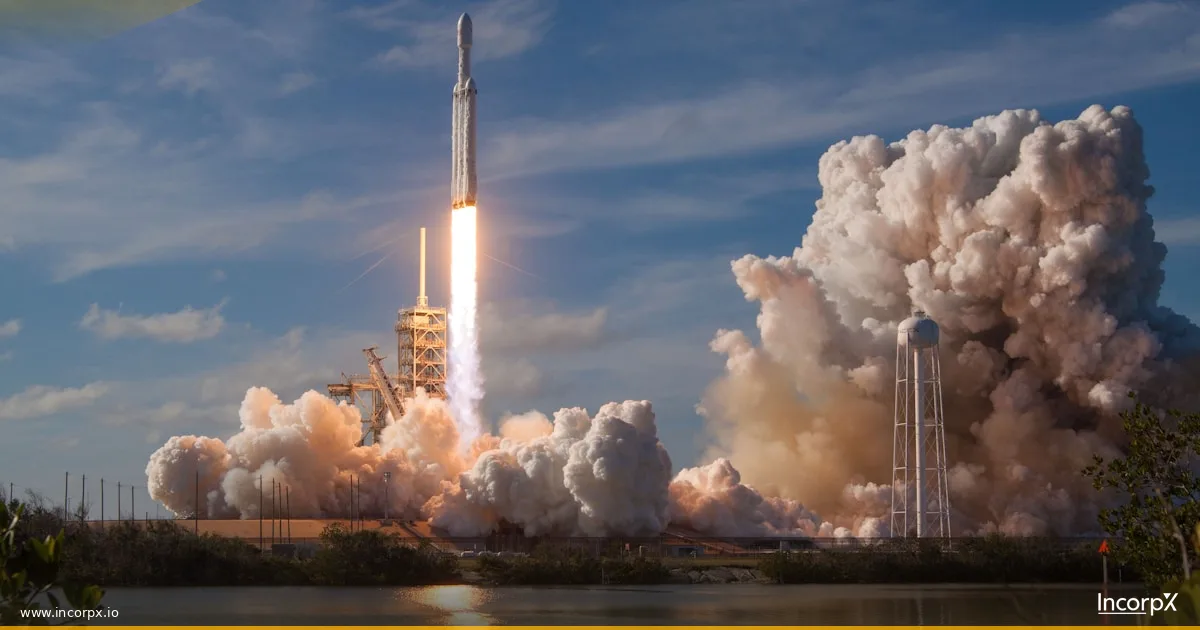
India launched its first private suborbital rocket in November 2022 when Skyroot Aerospace's Vikram-S lifted off from Sriharikota. In April 2023, the Union Cabinet approved the Indian Space Policy 2023, formally opening satellite manufacturing, launch vehicle development, and space-based services to private companies. By early 2026, over 250 space tech startups have registered in India, collectively raising more than USD 450 million in funding. IN-SPACe has processed over 300 authorization requests. ISRO has transferred production of its workhorse PSLV rocket to a private consortium. FDI norms have been liberalized to allow 100% foreign investment under the automatic route for most space activities. If you are building a space tech company in India, this guide covers every registration step, IN-SPACe authorization process, ISRO partnership pathway, funding option, and compliance requirement you need to know in 2026.
- Indian Space Policy 2023 formally opens launch vehicles, satellites, ground systems, and space services to private companies
- IN-SPACe is the single-window authorization body for all private space activities in India
- NSIL (NewSpace India Limited) manages ISRO technology transfers to private industry
- 100% FDI is allowed under the automatic route for satellites and space services; up to 49% automatic for launch vehicles
- Private Limited Company is the required structure for IN-SPACe authorization, FDI, and VC funding
- Over 250 space tech startups operate in India with combined funding exceeding USD 450 million
- ISRO test facilities, spectrum allocation, and launch infrastructure are accessible to authorized private entities
Indian Space Policy 2023: The Regulatory Foundation
India's space sector operated under ad hoc policies for decades, with ISRO functioning as the sole developer, manufacturer, launcher, and operator of space assets. The Indian Space Policy 2023, approved by the Union Cabinet on 6 April 2023, restructured this model by clearly separating roles across three entities:
| Entity | Primary Role | Key Functions |
|---|---|---|
| ISRO | Research and development | Advanced R&D, deep space missions, technology development for national strategic programmes, human spaceflight (Gaganyaan) |
| IN-SPACe | Authorization and promotion | Single-window clearance for private entities, regulatory oversight, safety evaluation, spectrum coordination, facility access facilitation |
| NSIL | Commercial exploitation | Technology transfer from ISRO to industry, commercial launch services, satellite transponder leasing, production outsourcing to private sector |
The policy explicitly states that Non-Government Entities (NGEs) are allowed to undertake end-to-end activities in the space sector, including designing, manufacturing, and operating launch vehicles, satellites, and ground systems. This is not a concession or experimental permission; it is a policy-level commitment backed by institutional restructuring. Before this policy, private companies could only participate as ISRO vendors manufacturing components to ISRO specifications. Now, private companies can develop independent space products and services, with IN-SPACe providing the regulatory framework.
IN-SPACe: Structure, Functions, and Authorization Categories
IN-SPACe was established in June 2020 and became fully operational in 2022 with its headquarters in Ahmedabad, Gujarat. It functions as an autonomous body under the Department of Space, independent of ISRO in its regulatory decisions. The Chairman of IN-SPACe reports to the Secretary, Department of Space, but authorization decisions are made by the IN-SPACe Board, which includes independent technical experts.
What IN-SPACe Authorizes
IN-SPACe processes authorization applications across six categories of space activities:
- Launch vehicle development and operations: Sub-orbital and orbital launch vehicles, sounding rockets, and reusable launch systems
- Satellite manufacturing and operations: Earth observation, communication, navigation, and scientific satellites across all orbit classes (LEO, MEO, GEO, SSO)
- Ground segment establishment: Tracking stations, telemetry stations, ground-based augmentation systems, and satellite control centres
- Space-based services: Remote sensing data distribution, satellite broadband, space-based IoT, navigation augmentation, and geospatial analytics
- Space situational awareness (SSA): Debris tracking, conjunction analysis, and space traffic management services
- Use of ISRO facilities and data: Access to test chambers, launch pads, ground stations, and archived satellite imagery for commercial purposes
IN-SPACe Authorization Process: Step by Step
The authorization workflow follows a structured four-stage process:
- Online application (Day 1): Submit through the IN-SPACe portal (inspace.gov.in) with project proposal, technical specifications, safety analysis, financial projections, and entity registration documents
- Preliminary screening (Days 1-30): IN-SPACe secretariat verifies completeness, assigns the application to relevant technical directorate, and requests additional documentation if needed
- Detailed technical evaluation (Days 30-90): IN-SPACe technical committees evaluate safety compliance, spectrum requirements, orbital slot availability, debris mitigation plan, and national security clearance. This stage may involve site inspections and technical presentations by the applicant.
- Authorization decision (Days 90-120): The IN-SPACe Board reviews the technical committee's recommendation and grants full authorization, conditional authorization (with specific compliance requirements), or rejection with documented reasons
ISRO Technology Transfer and NSIL Partnerships
One of the most significant aspects of the Indian Space Policy 2023 is the formalization of ISRO technology transfer to private industry through NSIL. ISRO has developed world-class space technologies over six decades, and the policy mandates sharing this knowledge with qualified private entities rather than restricting it to government use.
Technologies Available for Transfer
NSIL manages the transfer of over 100 ISRO-developed technologies across multiple domains:
- Launch vehicle systems: Liquid and solid propulsion stages, guidance and navigation systems, vehicle telemetry, and launch pad infrastructure designs. The PSLV production has been fully transferred to the HAL-L&T consortium.
- Satellite platforms: IMS-1 (Indian Mini Satellite) bus platform for small satellites, IRS (Indian Remote Sensing) bus designs, and communication satellite transponder systems
- Propulsion technologies: Liquid apogee motors, electric propulsion systems (Hall-effect thrusters), and green propellant systems
- Ground systems: Satellite tracking antenna designs, telemetry processing software, and mission control architecture
- Materials and manufacturing: Carbon-carbon composite nozzle technology, high-temperature alloys, and thermal protection systems
How Technology Transfer Works
The technology transfer process follows a structured pathway:
- Expression of interest: Companies submit EOI to NSIL for specific technologies listed on the NSIL technology catalogue
- Eligibility assessment: NSIL evaluates the company's manufacturing capability, technical team, financial capacity, and infrastructure readiness
- License agreement: NSIL and the company execute a Technology Transfer Agreement (TTA) specifying IP terms, royalty structure, production volume commitments, and quality standards
- Knowledge transfer: ISRO scientists and engineers provide hands-on training, technical documentation, and manufacturing process support during the transfer period (typically 12-24 months)
- Production and quality audit: NSIL and ISRO conduct periodic quality audits to ensure transferred technology meets original performance specifications
This pathway is how India's private space sector gains access to flight-proven technology without starting from scratch. Companies like Skyroot Aerospace, while developing their own propulsion systems, benefit from ISRO's open technical publications and the broader ecosystem of trained engineers that ISRO's decades of work have produced.
FDI Policy for India's Space Sector
The Union Cabinet approved liberalized FDI norms for the space sector in February 2024, replacing the earlier framework that required government approval for all space-related foreign investments. The new FDI structure creates category-specific thresholds:
| Space Activity Category | Automatic Route | Government Route | Total FDI Cap |
|---|---|---|---|
| Satellite manufacturing and operation | Up to 74% | Beyond 74% | 100% |
| Satellite data products and ground segment | Up to 100% | N/A | 100% |
| Launch vehicles and associated systems | Up to 49% | Beyond 49% | 100% |
| Components and systems for satellites, launch vehicles, and ground/user segments | Up to 100% | N/A | 100% |
This tiered approach reflects national security considerations. Launch vehicles have dual-use potential (ballistic missile technology), hence the 49% automatic route cap. Satellite data products and component manufacturing carry lower security sensitivity and are fully open. For most space tech startups working on satellite payloads, ground systems, space analytics, or component manufacturing, 100% FDI under the automatic route is available, requiring no prior government approval.
Step-by-Step Registration Process for a Space Tech Startup
Setting up a space tech startup in India involves entity incorporation, followed by sector-specific authorizations and registrations. Here is the complete registration roadmap:
Phase 1: Company Incorporation (7-15 Working Days)
- Obtain Digital Signature Certificates (DSC): All proposed directors need Class 3 DSCs. Processing takes 1-2 working days.
- Reserve company name: Apply via RUN service on MCA portal. Choose a name reflecting aerospace or space technology as the primary activity. Approval takes 1-3 working days.
- File SPICe+ form: The integrated form covers MOA, AOA, PAN, TAN, GST, EPFO, and ESIC in a single application. Select NIC code 72100 (R&D in natural sciences and engineering) or 30300 (manufacture of air and spacecraft) based on your primary activity.
- Receive Certificate of Incorporation: MCA issues the CoI with company PAN and TAN. This is the foundational document for all subsequent registrations and IN-SPACe authorization.
Phase 2: Post-Incorporation Registrations (15-30 Working Days)
- Open a current account: Required for all business transactions, government grant disbursements, and FDI inflows
- DPIIT Startup India recognition: Apply at startupindia.gov.in for tax holidays, self-certification privileges, and enhanced credibility for IN-SPACe applications. Space tech qualifies as an innovation-driven sector under DPIIT guidelines.
- GST registration: Mandatory for supply of space components, services, and satellite data products. Manufacturing activities above exemption threshold require GST registration from day one.
- MSME/Udyam registration: Free registration on udyam.gov.in. Provides access to MSME-specific government tenders, credit guarantee schemes, and priority lending from banks.
- Import-Export Code (IEC): Essential for importing space-grade components, propellants, testing equipment, and electronic subsystems from international suppliers.
Phase 3: IN-SPACe Authorization (60-120 Working Days)
- Prepare the project report: Document your proposed space activity, technical approach, team qualifications, facility requirements, safety analysis, debris mitigation plan (for orbital activities), and financial projections
- Submit application on IN-SPACe portal: Upload all documents at inspace.gov.in along with the company's Certificate of Incorporation, board resolution authorizing the space activity, and key management personnel details
- Respond to IN-SPACe queries: Technical committees may request additional documentation, site visits, or presentations during the evaluation period
- Receive authorization: IN-SPACe issues authorization with specific conditions, validity period, and compliance requirements
Phase 4: Sector-Specific Licenses (30-180 Working Days)
- WPC spectrum allocation: For satellite communication, ground station operation, or any RF-emitting space hardware, apply to the Wireless Planning and Coordination Wing of the Department of Telecommunications
- DGFT export license: Space technology is covered under the SCOMET (Special Chemicals, Organisms, Materials, Equipment, and Technologies) list. Export of space hardware and certain dual-use technologies requires DGFT clearance.
- Environmental clearance: For manufacturing facilities, propulsion test stands, and launch infrastructure, obtain clearance from MoEFCC and the State Pollution Control Board
- Factory license: Under the Factories Act, 1948, any manufacturing premise with 10+ workers using power needs a state factory license
Types of Space Tech Ventures and Their Requirements
The space tech sector spans multiple sub-domains, each with distinct technical, regulatory, and capital requirements. Understanding where your venture fits determines the registration pathway and authorization category:
Launch Vehicle Companies
Companies developing sub-orbital or orbital rockets represent the highest complexity and capital requirement in the space sector. Skyroot Aerospace (Hyderabad) and Agnikul Cosmos (Chennai) are India's leading private launch vehicle developers. Skyroot launched Vikram-S, India's first private suborbital rocket, in November 2022 from ISRO's Satish Dhawan Space Centre in Sriharikota. Agnikul is developing the Agnibaan rocket with a 3D-printed semi-cryogenic engine, a global first. Launch vehicle companies need IN-SPACe authorization for development, testing, and launch operations. Access to ISRO's launch facilities (Sriharikota or the proposed private launch complex in Tamil Nadu) requires separate facility-use agreements through IN-SPACe.
Satellite Manufacturing Companies
Satellite companies design and build spacecraft for Earth observation, communications, IoT, and scientific research. Pixxel builds hyperspectral imaging satellites for agricultural and environmental monitoring. Dhruva Space develops satellite deployment platforms and small satellite buses. Satellite companies need IN-SPACe authorization for the specific orbital parameters, frequency coordination through ITU (International Telecommunication Union), and debris mitigation compliance. Component testing at ISRO's environmental test facilities (thermal vacuum, vibration, EMI/EMC) is available through IN-SPACe facilitation.
Ground Segment and Space Services
Ground segment companies operate tracking stations, data downlink facilities, and satellite control centres. Space services companies provide analytics, remote sensing data products, satellite broadband, and navigation services. These ventures have lower capital intensity but require WPC spectrum clearance and DoT licensing alongside IN-SPACe authorization. Companies like SatSure (satellite analytics for agriculture and insurance) and GalaxEye (multi-sensor satellite fusion) operate in this space.
Space Situational Awareness (SSA)
Digantara is India's leading SSA startup, developing in-orbit sensors to track space debris and provide conjunction analysis. SSA is a growing market as the number of satellites in orbit exceeds 10,000 and collision risk increases. SSA companies need IN-SPACe authorization and often work with defence establishments for data-sharing agreements.
Funding the Space Tech Venture: Sources and Strategies
India's space tech sector attracted over USD 450 million in cumulative funding by early 2026, with deal sizes growing each year. Skyroot raised USD 78 million in its Series B round. Pixxel raised USD 36 million. Agnikul raised USD 32 million. Here are the primary funding sources for space tech startups:
- Venture capital: Space-focused VCs include Speciale Invest, pi Ventures, Kalaari Capital, and Omnivore (for space-agritech). Global VCs like GIC, Lightspeed, and Celesta Capital have also invested in Indian space startups.
- DPIIT Startup India benefits: 3-year income tax holiday under Section 80-IAC, angel tax exemption, and self-certification for labour and environmental compliance. Register under Startup India.
- SIDBI Fund of Funds: The Rs. 10,000 crore Fund of Funds for Startups provides capital through SEBI-registered AIFs that have invested in deep tech and space companies.
- IN-SPACe facilitated support: IN-SPACe does not directly fund startups but facilitates access to ISRO test infrastructure (saving crores in facility development costs) and helps connect startups with potential customers in government and defence.
- Defence and strategic contracts: Indian defence forces are increasingly procuring space-based surveillance, communication, and navigation capabilities from private companies under the iDEX (Innovations for Defence Excellence) programme.
- International contracts: Indian space startups are competing for global launch contracts, satellite data customers, and international space agency partnerships. OneWeb (Bharti-backed) launched 36 satellites on an ISRO GSLV-Mk III/LVM3 in 2023.
Intellectual Property Strategy for Space Tech
Space technology is inherently IP-intensive. Propulsion designs, satellite bus architectures, antenna configurations, ground station software algorithms, and manufacturing processes are all patentable innovations. A strong IP portfolio serves three purposes for space startups: competitive protection, investor confidence, and IN-SPACe evaluation strength.
What to Patent
- Propulsion systems: Novel fuel formulations, 3D-printed engine designs (like Agnikul's single-piece engine), electric propulsion systems, and green propellant technologies
- Satellite hardware: Antenna designs, solar panel deployment mechanisms, thermal management systems, and miniaturized sensor payloads
- Software and algorithms: Orbit determination algorithms, collision avoidance software, image processing for remote sensing data, and autonomous satellite operations software
- Manufacturing processes: Additive manufacturing methods for space components, composite material formulations, and cleanroom production techniques
Patent Filing Strategy
File Indian patents first through the Indian Patent Office, then use the PCT (Patent Cooperation Treaty) route for international protection within the 12-month priority period. Space tech patents qualify for expedited examination under the Startup India IP scheme, which provides an 80% rebate on patent filing fees for DPIIT-recognized startups. Given that many space technologies have dual-use (civilian and military) potential, consult DGFT before filing international patents to ensure SCOMET list compliance.
Key Players in India's Private Space Ecosystem
Understanding the competitive and collaborative ecosystem helps position your venture effectively. Here are the leading private space companies operating in India as of 2026:
| Company | Focus Area | Key Achievement | Total Funding |
|---|---|---|---|
| Skyroot Aerospace | Launch vehicles (Vikram series) | India's first private rocket launch (Vikram-S, November 2022) | ~USD 78 million |
| Agnikul Cosmos | Launch vehicles (Agnibaan) | World's first single-piece 3D-printed rocket engine; test-fired from Sriharikota | ~USD 32 million |
| Pixxel | Hyperspectral imaging satellites | Launched TD-2 technology demonstrator; constellation of 6 satellites planned | ~USD 36 million |
| Dhruva Space | Satellite platforms and deployment | Thybolt satellites deployed via ISRO PSLV; orbital deployer systems | ~USD 15 million |
| Digantara | Space situational awareness | India's first commercial SSA satellite mission; defence SSA contracts | ~USD 12 million |
| Bellatrix Aerospace | In-space propulsion | Developed India's first private electric propulsion system for orbit raising | ~USD 8 million |
| SatSure | Satellite analytics (agriculture, insurance) | Decision intelligence platform serving banks and government for crop monitoring | ~USD 6 million |
| GalaxEye | Multi-sensor satellite fusion | Developing SAR + optical fusion satellite for all-weather imaging | ~USD 7 million |
This ecosystem is collaborative as well as competitive. Skyroot and Dhruva have partnered on payload integration. Pixxel's satellites were launched on ISRO's PSLV. Agnikul has an MoU with ISRO for launch pad access at Sriharikota. New entrants benefit from this growing network effect, where each company's success expands the infrastructure, talent pool, and investor interest available to the entire sector.
Compliance and Ongoing Requirements for Space Tech Companies
Space tech companies in India face multi-layered compliance obligations spanning corporate law, tax regulations, IN-SPACe authorization conditions, and international space law commitments.
Corporate and Tax Compliance (Annual)
- ROC filings: Form MGT-7 (annual return) and Form AOC-4 (financial statements) filed with MCA within 60 days and 30 days of the AGM respectively
- Board meetings: Minimum 4 board meetings per year with a gap of not more than 120 days between meetings
- AGM: Within 6 months of the financial year end (by 30 September for March year-end companies)
- Income tax return: Filed by 31 October (if audit is required, which is mandatory for all companies)
- GST returns: Monthly GSTR-1 and GSTR-3B (or quarterly under QRMP). Annual GSTR-9 by 31 December.
- TDS compliance: Monthly TDS deposits by the 7th and quarterly returns (Form 26Q, 24Q)
- Transfer pricing: Mandatory if transacting with foreign group entities, which is common for space companies with international partners
IN-SPACe Compliance
- Periodic activity reports: Quarterly and annual reports to IN-SPACe on project progress, milestone achievements, and safety compliance
- Authorization renewal: IN-SPACe authorizations have defined validity periods. Renewal applications must be filed before expiry with updated project status
- Incident reporting: Any anomaly during testing, launch, or satellite operations must be reported to IN-SPACe within 48 hours
- Debris compliance: Annual certification that debris mitigation commitments are being met for all authorized orbital activities
International Compliance
- ITU frequency coordination: Satellite operators must maintain ITU filings for their authorized frequency bands and orbital slots
- SCOMET/export control: Any export of space hardware, software, or technology must comply with DGFT's SCOMET list and Wassenaar Arrangement commitments
- Outer Space Treaty obligations: India is a signatory; all activities must comply with international space law including the Liability Convention and Registration Convention
Managing compliance across corporate law, taxation, IN-SPACe regulations, and export controls requires dedicated expertise. IncorpX's compliance management services handle your ROC filings, GST returns, TDS compliance, and help prepare IN-SPACe periodic reports through a single dashboard.
Key Challenges and Risk Factors
Building a space tech company in India comes with sector-specific challenges that founders must plan for:
- Long development cycles: Space hardware takes 2-5 years from concept to first flight. Revenue generation is delayed, requiring patient capital and milestone-based funding strategies.
- High failure tolerance: Rocket and satellite development involve iterative testing with expected failures. Investors must understand that test failures are engineering milestones, not business failures.
- Talent competition: India produces strong aerospace engineers, but experienced space systems engineers, mission architects, and propulsion specialists are scarce. ISRO alumni are the primary talent source for leadership roles.
- Supply chain dependencies: Space-grade electronics, radiation-hardened components, and specialty materials are often imported from the US, Europe, and Japan. ITAR (International Traffic in Arms Regulations) restrictions can complicate procurement of certain US-origin components.
- Regulatory evolution: The Space Activities Bill is still pending. Regulatory frameworks are evolving, and companies must stay adaptive to policy changes in spectrum allocation, debris requirements, and authorization conditions.
- Insurance costs: Launch insurance and satellite operational insurance are expensive, typically 10-20% of the total mission cost. Indian insurers are still developing space insurance products, and most coverage comes from international underwriters.
Emerging Opportunities in India's Space Sector
Beyond the established segments, multiple emerging opportunities are opening for new entrants:
- Satellite broadband: The Department of Telecommunications has allocated satellite spectrum for broadband services. OneWeb (Bharti-backed), Amazon Kuiper, and Starlink are seeking or have received authorization. Indian startups building ground terminal equipment, network management software, and last-mile integration services have a growing market.
- Space-based IoT: Small satellite constellations for IoT connectivity in remote areas (agriculture, forestry, maritime, oil and gas) represent a Rs. 5,000+ crore annual market in India alone.
- In-space manufacturing: Microgravity manufacturing of fiber optics, pharmaceuticals, and advanced materials is an emerging global market. Indian startups with ISRO's microgravity experiment heritage have a head start.
- Space sustainability: Active debris removal, satellite servicing, and in-orbit refueling are multi-billion dollar global markets. Startups building these capabilities today will capture first-mover advantage.
- Defence and strategic applications: The iDEX programme and defence procurement reforms are creating a growing market for private space companies in ISR (Intelligence, Surveillance, Reconnaissance), secure communications, and navigation warfare.
How IncorpX Supports Space Tech Startup Registration
IncorpX provides end-to-end registration and compliance support for space tech companies at every stage:
- Private Limited Company registration: Complete incorporation with MOA, AOA, PAN, TAN, and GST in a single SPICe+ filing. The foundational step for IN-SPACe authorization and FDI eligibility. Starting at Rs. 5,999.
- DPIIT Startup India recognition: Application filing for tax holidays (Section 80-IAC), angel tax exemption, self-certification, and enhanced credibility for IN-SPACe applications and investor pitches.
- Patent registration: Filing Indian patents and PCT international applications for your space technologies with 80% fee rebate under the Startup India IP scheme.
- Annual compliance management: ROC filings, GST returns, TDS compliance, board meeting coordination, and statutory audit management from a single platform.
- Virtual CFO services: Financial planning, investor reporting, R&D expenditure optimization, transfer pricing documentation, and funding round structuring for space tech ventures.
- Seed funding assistance: Connect with deep tech VCs, prepare investor documentation, and structure early-stage rounds for space startups with long development timelines.
India's space sector is at the inflection point that IT was in the 1990s. The regulatory framework is in place, government commitment is backed by real policy and budget allocation, global investors are active, and the talent pool is deep. The first step is the right company structure, the right registrations, and the right advisory partner to handle compliance while you focus on building space technology.




 Nebin Binoy