EV Charging Station Business Registration: DISCOM Approval and Subsidies 2026
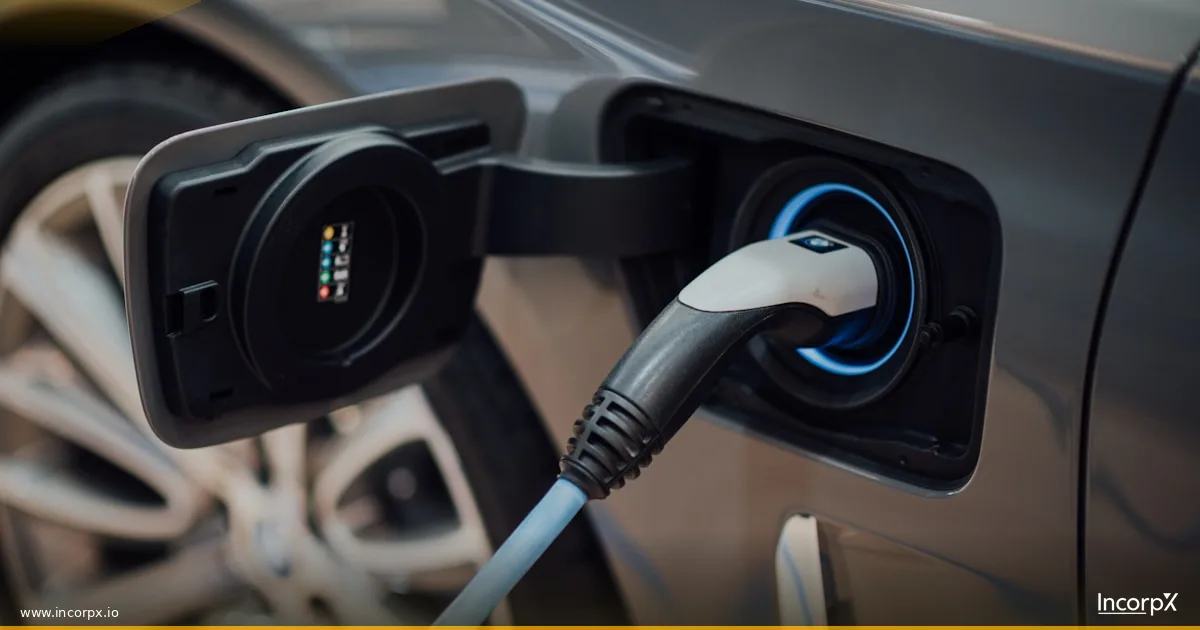
India's electric vehicle market is growing at over 40% annually, with EV sales crossing 19 lakh units in FY 2024-25. The government's target of 30% EV penetration by 2030 requires a charging network 10 times larger than today's. This gap represents a significant business opportunity. Setting up an EV charging station requires the right business registration, DISCOM electrical connection approval, BIS-compliant equipment, and knowledge of available subsidies under the PM E-DRIVE scheme and state EV policies. This guide covers every step of the registration process, from entity selection to subsidy disbursement.
Why Start an EV Charging Business in 2026
The EV charging infrastructure market in India is projected to reach ₹15,000 crore by 2030, growing from ₹2,800 crore in 2024. Three factors make 2026 the right entry point for new operators.
Government policy support is at its peak. The PM E-DRIVE scheme provides capital subsidies covering 30 to 50% of charger costs. State EV policies in 20+ states offer additional incentives including electricity duty exemptions, land subsidies, and demand charge waivers. The Ministry of Power has simplified regulations, clarifying that EV charging does not require a license under the Electricity Act, 2003.
EV adoption is accelerating. Two-wheeler and three-wheeler EV sales dominate current volumes, but passenger car EV sales are growing at 70%+ year-on-year. Tata Motors, Mahindra, Hyundai, and MG Motor now offer 15+ EV models priced below ₹20 lakh. More vehicles on the road means more demand for public charging infrastructure.
The charger-to-vehicle ratio is critically low. India has approximately 12,000 public charging stations for over 35 lakh registered EVs. The ideal ratio recommended by the International Energy Agency is 1 charger per 10 to 15 EVs. India currently operates at roughly 1 charger per 290 EVs, indicating massive under-supply.
Business Entity Selection for EV Charging
Choosing the right business entity affects your subsidy eligibility, funding access, liability protection, and tax treatment. Here are the options ranked by suitability for EV charging operations.
| Entity Type | Best For | Subsidy Eligibility | Funding Access | Setup Cost |
|---|---|---|---|---|
| Private Limited Company | Multi-location networks, VC-funded operations | Full eligibility (PM E-DRIVE + state) | High (equity + debt) | ₹8,000 to ₹15,000 |
| LLP | 2 to 5 partner operations, moderate scale | Full eligibility | Medium (debt-focused) | ₹5,000 to ₹10,000 |
| One Person Company (OPC) | Solo operators, single location | Full eligibility | Limited | ₹6,000 to ₹10,000 |
| Proprietorship | Home charging setups, very small scale | Limited (state schemes only) | Low | ₹1,000 to ₹3,000 |
A Private Limited Company registration is recommended for operators planning to raise investment, install 5+ chargers, or expand to multiple locations. The limited liability protection is critical because EV charging involves electrical equipment, public access, and significant capital investment.
Register Your EV Charging Business
Private Limited Company registration with name approval, DSC, DIN, MOA, AOA, PAN, TAN, and GST filing support.
Start Company Registration, ₹5,999 OnwardsStep-by-Step Registration Process
Setting up a legally compliant EV charging station involves 8 sequential steps. Complete them in order because later steps depend on documents from earlier stages.
- Register Your Business Entity
Register a Private Limited Company, LLP, or OPC through the MCA portal. Obtain Certificate of Incorporation, PAN, and TAN. This takes 10 to 15 working days. Choose an appropriate NIC code: 35106 (distribution of electricity) or 45403 (retail sale of motor vehicle parts and accessories) depending on your primary activity.
- Obtain GST Registration
Apply for GST registration under the services category. EV charging falls under SAC code 998714. GST registration takes 3 to 7 working days. You need this before starting commercial operations and for claiming Input Tax Credit on charger purchases.
- Complete MSME/Udyam Registration
Register on the Udyam portal for MSME benefits including priority lending, CGTMSE coverage, and technology upgrade subsidies. Registration is free and instant. Classify your business as a micro, small, or medium enterprise based on investment and turnover.
- Apply for DISCOM Electrical Connection
Submit an application to your local DISCOM for a new connection under the EV charging tariff category. Provide load requirements (typically 50 kVA to 500 kVA depending on station size), site plan, entity registration documents, and property ownership or lease documents. DISCOM conducts a site inspection and approves load sanction.
- Procure BIS-Certified Chargers
Purchase EV chargers that carry BIS IS 17017 certification. Verify the manufacturer's BIS license number on the BIS website. Common certified manufacturers include Delta Electronics, ABB, Exicom, Servotech, and Tata Power. Ensure chargers support Bharat DC-001, CCS2, and Type 2 AC connectors as per Indian standards.
- Complete Site Preparation and Installation
Prepare the site with proper electrical infrastructure (transformer, panel boards, cabling), civil work (concrete foundation, canopy, signage), fire safety equipment, and CCTV installation. Engage a licensed electrical contractor for all wiring and panel work. Obtain an electrical safety certificate from the contractor.
- Obtain Municipal Permissions
Apply for trade license from the local municipal corporation, fire safety NOC from the fire department, and building permission if any structural modifications were made. Some cities require an additional signage permit for outdoor branding.
- Apply for Government Subsidies
Submit subsidy applications through the BEE portal (for PM E-DRIVE) and your state's EV policy nodal agency. Applications require charger BIS certificates, DISCOM approval letter, site photographs, entity registration documents, and bank account details for subsidy disbursement.
DISCOM Approval: Process, Documents, and Timelines
DISCOM (Distribution Company) approval is the single most important regulatory step for an EV charging station. Without it, you cannot legally draw the power required to operate commercial chargers.
Application Process
Submit your application through the DISCOM's online portal or divisional office. The application must include: company registration certificate, address proof of premises (ownership deed, lease agreement, or rent agreement), site layout plan showing charger placement, electrical load calculation signed by a licensed electrical engineer, GST registration certificate, and identity proof of the authorised signatory.
Load Sanction and Site Inspection
After application, the DISCOM's technical team conducts a site feasibility inspection to verify transformer capacity, distance from the nearest substation, cable routing, and earthing provisions. If the existing transformer cannot support the requested load, the DISCOM may require a dedicated transformer installation at the applicant's cost (₹3 lakh to ₹10 lakh for a 100 to 500 kVA transformer).
Timelines by State
| State/DISCOM | Processing Time | EV Tariff (per kWh) | Online Portal |
|---|---|---|---|
| Delhi (BSES/Tata Power DDL) | 15 to 20 working days | ₹4.50 | Yes |
| Maharashtra (MSEDCL) | 20 to 30 working days | ₹6.00 | Yes |
| Karnataka (BESCOM) | 15 to 25 working days | ₹5.50 | Yes |
| Tamil Nadu (TANGEDCO) | 20 to 30 working days | ₹5.00 | Partial |
| Gujarat (UGVCL/DGVCL) | 15 to 20 working days | ₹4.70 | Yes |
| Telangana (TSSPDCL) | 20 to 30 working days | ₹6.00 | Partial |
| Uttar Pradesh (UPPCL) | 25 to 45 working days | ₹5.50 | No |
PM E-DRIVE Scheme: Subsidies for Charging Infrastructure
The PM E-DRIVE (Electric Drive Revolution in Innovative Vehicle Enhancement) scheme, approved by the Union Cabinet in September 2024 with an outlay of ₹10,900 crore over 2 years, replaced the FAME II scheme. Its charging infrastructure component is the largest central government subsidy programme for EV charger installation.
Subsidy Structure
- Slow/AC Chargers (up to 22 kW): Capital subsidy of up to 50% of charger equipment cost, capped at ₹30,000 per charger
- Fast/DC Chargers (50 kW to 150 kW): Capital subsidy of up to 30% of charger equipment cost, capped at ₹15 lakh per charger
- Ultra-Fast Chargers (150 kW+): Capital subsidy of up to 30% of equipment cost, capped at ₹25 lakh per charger
- Highway Corridor Chargers: Additional 10% subsidy for chargers installed along national highways at intervals of 25 km or less
Eligibility Criteria
To qualify for PM E-DRIVE subsidies, your EV charging station must meet these conditions: the business must be a registered entity (company, LLP, or firm), chargers must carry BIS IS 17017 certification, the station must have a valid DISCOM connection under EV tariff, minimum operational requirement of 12 hours daily availability, and the station must be registered on the BEE portal with real-time data sharing enabled.
State-Level EV Charging Incentives
In addition to the central PM E-DRIVE subsidy, 20+ state governments offer separate incentives under their respective EV policies. These are stackable with the central subsidy, reducing your effective capital expenditure by 40 to 70%.
Delhi EV Policy 2.0 (extended to 2026): 100% exemption on electricity duty for EV charging stations. Road tax exemption for commercial EVs. The Delhi government also partners with DISCOMs to provide single-window clearance for charging station connections. Land subsidy for stations in identified EV zones.
Maharashtra EV Policy 2021 (active through 2026): 25% capital subsidy on charging equipment (over and above PM E-DRIVE subsidy). Exemption from demand charges for EV charging connections. Industrial electricity tariff rates for charging stations instead of higher commercial rates. 15% capital subsidy for manufacturing EV charging equipment in the state.
Karnataka EV Policy 2017-27: Complete exemption from electricity duty for 5 years from date of commissioning. First-mover incentive of ₹1 lakh per DC fast charger for the first 100 stations registered in the state. BESCOM has a dedicated EV cell for connection approvals. Additional incentive for battery swapping infrastructure.
Gujarat EV Policy 2021-26: ₹10,000 per AC charger point and up to ₹5 lakh per DC fast charger as state capital subsidy. 5-year exemption from electricity duty. Land at subsidised rates in GIDC industrial areas for charging station setup. Priority electrical connection with 15-day approval guarantee.
Tamil Nadu EV Policy 2023: 15% capital subsidy on charger equipment. Full exemption from demand charges for 3 years. Dedicated industrial zones for EV charging hubs with plug-and-play infrastructure. TANGEDCO offers time-of-day (ToD) tariff discounts of up to 20% for off-peak charging.
Register as a Startup for Priority Subsidy Access
DPIIT-recognised startups receive priority allocation in PM E-DRIVE subsidy applications and access to Startup India Seed Fund.
Apply for Startup India RecognitionBIS Standards and Technical Requirements
All EV chargers installed in India must comply with Bureau of Indian Standards (BIS) IS 17017 series. Non-compliance disqualifies your station from subsidies, creates legal liability, and risks DISCOM connection cancellation.
Charger Types and Standards
- Bharat AC-001: 3.3 kW single-phase AC charger with 15A socket. Basic Level 1 charger for two-wheelers and three-wheelers. Charging time: 6 to 8 hours for a typical EV car battery
- Type 2 AC (IEC 62196): 7.4 kW to 22 kW three-phase AC charger. Standard Level 2 charger for passenger cars. Charging time: 2 to 6 hours depending on vehicle battery capacity
- Bharat DC-001: 15 kW DC charger with GB/T connector. Designed for buses and commercial vehicles. Charging time: 1 to 2 hours for a passenger car
- CCS2 (Combined Charging System): 50 kW to 350 kW DC fast charger. The dominant standard for passenger cars in India (Tata, Hyundai, MG, BYD). Charging time: 20 to 60 minutes for 80% charge
- CHAdeMO: 50 kW to 100 kW DC charger. Used primarily by Nissan and Mitsubishi EVs. Less common in India but required for full compatibility
GST, Taxation, and Financial Planning
Understanding the tax structure for EV charging is critical for pricing, profitability, and compliance. The GST treatment has specific nuances that affect how you structure your billing.
GST Treatment
Charging service fee: 18% GST under SAC 998714. This covers the service of providing electricity through your equipment. Electricity component: Technically exempt from GST (electricity is a state subject under Article 286). In practice: Most EV charging operators charge a composite rate per kWh that includes both electricity cost and service margin. The entire composite amount attracts 18% GST unless electricity and service are separately invoiced.
Input Tax Credit (ITC)
EV charging station operators can claim ITC on: charger equipment purchase (18% GST on capital goods), civil construction materials (12 to 28% GST on cement, steel, electrical components), software and networking equipment (18% GST), annual maintenance contracts, and professional services. Effective tax rate after ITC typically reduces to 8 to 12% of revenue.
Income Tax Benefits
- Section 40(IIB) of Income Tax Act, 2025: Accelerated depreciation of 40% on EV charging equipment (classified as energy-saving devices)
- Section 140 (Startup Tax Holiday): DPIIT-recognised startups can claim 3 consecutive years of tax holiday out of the first 10 years from incorporation
- Section 44AD/44ADA: Presumptive taxation available if turnover is below ₹3 crore (₹75 lakh for services), reducing compliance burden
Set Up GST-Compliant Billing for Your Charging Station
Proper GST structure from day one ensures you maximise ITC claims on charger purchases and avoid notice triggers during audits.
Complete GST Registration, ₹1,999 OnwardsRevenue Model and Break-Even Analysis
EV charging station profitability depends on 4 variables: location, charger type, utilisation rate, and subsidy received. Here is a realistic break-even analysis for 2026.
| Parameter | AC Level 2 (7.4 kW) | DC Fast (50 kW) | DC Ultra-Fast (150 kW) |
|---|---|---|---|
| Charger Equipment Cost | ₹1.5 lakh to ₹3 lakh | ₹12 lakh to ₹18 lakh | ₹25 lakh to ₹40 lakh |
| Installation and Civil Work | ₹50,000 to ₹1 lakh | ₹3 lakh to ₹5 lakh | ₹5 lakh to ₹8 lakh |
| PM E-DRIVE Subsidy | Up to ₹30,000 | Up to ₹5 lakh | Up to ₹10 lakh |
| Net Investment (after subsidy) | ₹1.7 lakh to ₹3.7 lakh | ₹10 lakh to ₹18 lakh | ₹20 lakh to ₹38 lakh |
| Avg. Daily Sessions | 4 to 8 | 8 to 15 | 10 to 20 |
| Revenue per Session | ₹80 to ₹150 | ₹300 to ₹600 | ₹500 to ₹1,200 |
| Monthly Revenue | ₹10,000 to ₹36,000 | ₹72,000 to ₹2.7 lakh | ₹1.5 lakh to ₹7.2 lakh |
| Monthly Operating Cost | ₹5,000 to ₹12,000 | ₹30,000 to ₹60,000 | ₹50,000 to ₹1.5 lakh |
| Break-Even Period | 2 to 3 years | 2.5 to 4 years | 3 to 5 years |
Location is the single largest factor affecting utilisation. Stations near office complexes, shopping malls, highway rest stops, and residential clusters with high EV ownership consistently outperform stations in lower-traffic areas. Conduct a 2-week traffic study at your proposed location before committing to a lease.
Post-Registration Compliance Requirements
Running an EV charging station involves ongoing compliance across multiple regulatory domains. Missing deadlines results in penalties, subsidy clawbacks, and operational disruptions.
Monthly and Quarterly Compliance
- GST Returns: File GSTR-1 (outward supplies) and GSTR-3B (summary return) monthly, or quarterly under the QRMP scheme if turnover is below ₹5 crore
- TDS Filing: If you pay rent exceeding ₹50,000 per month, deduct TDS at 10% and file Form 26Q quarterly
- BEE Portal Data: Upload monthly charger utilisation data to the BEE portal for PM E-DRIVE compliance monitoring
- Electricity Bill Reconciliation: Reconcile DISCOM bills with charger meter readings monthly to detect metering discrepancies early
Annual Compliance
- Income Tax Return: File ITR by 31 July (non-audit) or 31 October (audit cases) of each assessment year
- ROC Annual Filing: Companies file AOC-4 and MGT-7/MGT-7A. LLPs file Form 8 and Form 11. Due dates: 30 September and 30 October respectively
- Trade License Renewal: Annual renewal with the local municipal corporation (fees: ₹2,000 to ₹15,000)
- Fire Safety NOC Renewal: Annual renewal with the local fire department (fees: ₹1,000 to ₹5,000)
- Insurance Renewal: Equipment insurance, public liability, and fire insurance policies require annual renewal
- Charger Calibration: Annual calibration and safety testing of all charger units by a BIS-empanelled agency
For companies with multiple compliance obligations, engaging a Virtual CFO service ensures all deadlines are tracked and filings completed on time. A missed ROC filing alone attracts a penalty of ₹100 per day per form.
Location Strategy and Site Selection
Site selection directly determines your charging station's revenue and payback period. The Ministry of Power guidelines identify 7 priority location categories for EV charging infrastructure.
- Highway Corridors: National and State Highways with charging stations every 25 km. Highest subsidy priority under PM E-DRIVE. Target traffic of 50,000+ vehicles daily
- Commercial Complexes: Shopping malls, office parks, and business districts where vehicles are parked for 2 to 4 hours (ideal for AC Level 2 charging)
- Residential Clusters: Apartment complexes and gated communities with overnight charging demand. Best suited for AC chargers with lower power requirements
- Transport Hubs: Metro stations, bus terminals, railway stations, and airports with high footfall and parking availability
- Fuel Stations: Existing petrol pump forecourts. Oil marketing companies (IOCL, BPCL, HPCL) are actively partnering with charging operators
- Fleet Depots: Commercial EV fleet operators (ride-hailing, delivery, logistics) need dedicated fast charging at their depots
- Government Buildings: Public offices, courthouses, and government hospitals with public parking areas
Prioritise locations where vehicles are already parked for extended periods. An AC charger at a shopping mall where cars park for 3 hours generates more revenue than the same charger at a standalone location with 30-minute visits. For DC fast chargers, highway corridors and fleet depots offer the highest utilisation rates.
Common Mistakes to Avoid
Operators who enter the EV charging business without proper planning frequently encounter these issues. Each mistake carries financial and regulatory consequences.
- Installing chargers before DISCOM approval: If load sanction is denied or reduced, your installed chargers cannot operate at rated capacity. Always secure DISCOM approval first
- Buying non-BIS certified chargers to save cost: Cheap unbranded chargers from uncertified sources void all subsidy eligibility and create safety liability. The cost difference is typically only 10 to 15%
- Ignoring GST registration: Operating without GST registration means you cannot claim ITC on charger purchases (18% of ₹12 lakh+ for a DC charger is ₹2.16 lakh lost)
- Over-sizing the station: Installing 10 DC fast chargers at a location that generates 5 charging sessions daily. Start with 2 to 3 chargers and scale based on actual demand
- Neglecting software and networking: Modern EV chargers require OCPP (Open Charge Point Protocol) compatible software, payment gateway integration, and mobile app connectivity. Budget 10 to 15% of total cost for software
- Missing subsidy application windows: PM E-DRIVE and state subsidies have application windows and quotas. Register on the BEE portal and state EV cell portal immediately after business entity registration, even before charger procurement
Funding and Financing Options
EV charging station setup requires capital ranging from ₹5 lakh to ₹50 lakh. Here are the financing channels available in 2026.
- Bank Term Loans: Scheduled commercial banks offer EV infrastructure loans at 10 to 13% interest for 5 to 7 year terms. SBI, PNB, and Bank of Baroda have dedicated green energy lending programmes. MSME-registered entities get 2 to 3% interest rate concessions
- CGTMSE (Credit Guarantee Fund): MSME-registered businesses can access collateral-free loans up to ₹5 crore under CGTMSE. The guarantee covers 75 to 85% of the loan amount, reducing the bank's risk and your collateral requirement
- Startup India Seed Fund: DPIIT-recognised startups can access up to ₹50 lakh as seed funding through approved incubators. Suitable for pilot-stage operations with 1 to 3 charger installations
- Venture Capital and PE: EV charging networks with proven unit economics and expansion plans attract VC funding. Average Series A rounds for EV charging startups in India range from ₹5 crore to ₹25 crore
- NABARD Refinance: For rural and semi-urban EV charging stations, NABARD offers refinance to lending banks at concessional rates, making loans 1 to 2% cheaper for the borrower
Get Your EV Charging Business Compliance-Ready
IncorpX handles company registration, GST, MSME, Startup India, and annual compliance so you focus on building your charging network.
Future Outlook: EV Charging in India 2026 to 2030
The EV charging sector is entering its high-growth phase. Operators who establish stations in 2026 benefit from first-mover advantages in location acquisition, subsidy access, and brand recognition.
Battery swapping is emerging as a parallel channel. NITI Aayog's Battery Swapping Policy enables swap stations for two-wheelers and three-wheelers. This creates a complementary revenue stream for existing charging station operators who can install both charging points and swap stations at the same location.
Vehicle-to-Grid (V2G) technology will create new revenue models. Future regulations may allow EV charging stations to sell stored energy back to the grid during peak demand hours, turning charging infrastructure into a distributed energy asset.
Fleet electrification is accelerating demand. E-commerce companies (Amazon, Flipkart), ride-hailing platforms (Ola, Uber), and logistics operators (Delhivery, BlueDart) have committed to partial fleet electrification by 2028. Each fleet operator needs dedicated fast charging infrastructure, creating bulk demand for commercial charging services.
The Ministry of Power has signalled its intent to mandate EV charging provisions in all new commercial buildings, residential complexes with 50+ units, and government buildings from 2027. This regulatory push will create a steady pipeline of installation contracts for established EV charging operators. Register your business entity now, secure DISCOM approvals, and build operational experience before this demand surge hits the market.
For ongoing compliance management and financial planning, partner with professional service providers who understand the intersection of energy regulation, GST compliance, and startup incentives that define the EV charging business.







 Nebin Binoy