EV Startup Registration in India: Licenses, Subsidies, and Incentives (2026)
India's electric vehicle revolution is accelerating at an unprecedented pace. With the government targeting 30% EV penetration by 2030, massive subsidies through FAME III and PLI schemes, and a rapidly growing charging infrastructure, the opportunity for EV startups has never been greater. However, the EV sector is one of the most heavily regulated industries in India, with requirements spanning automotive safety, environmental compliance, battery management, and manufacturing standards. This guide covers every registration, license, subsidy, and compliance requirement for starting an EV business in India in 2026.
Types of EV Business Opportunities
The EV ecosystem extends far beyond vehicle manufacturing. Here are the key business categories, each with different investment, licensing, and compliance requirements:
| Business Category | Investment Range | Key Licenses | Entry Barrier |
|---|---|---|---|
| EV Manufacturing (2W/3W) | Rs. 5 crore to Rs. 50 crore | CMVR type approval, factory license, SPCB | High |
| EV Manufacturing (4W) | Rs. 100 crore+ | CMVR type approval, factory license, SPCB, EIA | Very High |
| Battery Pack Assembly | Rs. 2 crore to Rs. 20 crore | BIS certification, factory license, SPCB, EPR | Medium-High |
| EV Charging Stations | Rs. 10 lakh to Rs. 2 crore | DISCOM connection, BIS-certified chargers | Low-Medium |
| Battery Swapping | Rs. 50 lakh to Rs. 5 crore | Safety standards, interoperability compliance | Medium |
| EV Fleet Management | Rs. 50 lakh to Rs. 10 crore | Company registration, transport permits | Low-Medium |
| EV Software/Telematics | Rs. 20 lakh to Rs. 5 crore | Company registration, data protection | Low |
Company Registration and Business Setup
Regardless of the EV business type, proper company registration is the essential first step.
- Register as a Private Limited Company: Apply for Private Limited Company registration through MCA's SPICe+ form with an appropriate object clause covering EV manufacturing, technology, and energy services (10 to 15 working days)
- Apply for GST registration: GST registration is mandatory for all EV businesses (3 to 7 working days)
- Register under MSME/Udyam: MSME registration provides access to priority lending, government tenders, and subsidy schemes
- Apply for Startup India recognition: DPIIT recognition for tax holiday, patent fast-tracking, and government scheme eligibility
- Register trademarks: Protect your brand through trademark registration in Class 12 (vehicles) and Class 9 (electronic components)
- Open a company bank account: Present CoI, PAN, and board resolution
- Obtain sector-specific licenses: Based on your EV business type (details in sections below)
Government Subsidies and Incentives
One of the biggest advantages of starting an EV business in India is the extensive government support through subsidies, incentives, and policy benefits at both central and state levels.
Central Government Schemes
| Scheme | Benefit | Eligibility |
|---|---|---|
| FAME III | Demand incentives (subsidies) for EV buyers | OEMs meeting localization and performance criteria |
| PLI for ACC Batteries | Incentive on incremental sales (Rs. 18,100 crore) | Battery manufacturers with min 5 GWh capacity |
| PLI for Auto Components | 13% to 18% incentive on sales (Rs. 25,938 crore) | EV and component manufacturers |
| GST Reduction | 5% GST on EVs (vs 28%+ on ICE vehicles) | All EV manufacturers and sellers |
| Section 80EEB | Rs. 1.5 lakh deduction on EV loan interest | Individual EV buyers |
| Customs Duty Exemption | Reduced/nil duty on specific EV components | EV manufacturers importing components |
State-Level EV Policies
Almost every major state has launched its own EV policy with additional incentives. Key benefits typically include:
- Capital subsidy: 15% to 30% on fixed capital investment for EV manufacturing units
- SGST reimbursement: 50% to 100% for EV manufacturers and buyers for 5 to 10 years
- Road tax exemption: 100% exemption on EV registration and road tax
- Stamp duty exemption: Waiver on land purchase for EV manufacturing
- Electricity tariff discount: Industrial power at subsidized rates for EV manufacturers
- Land allocation: Dedicated EV parks with pre-approved clearances
EV Manufacturing Licenses and Approvals
CMVR Type Approval Process
The Central Motor Vehicles Rules (CMVR) type approval is the most critical regulatory requirement for any company manufacturing vehicles for sale in India.
- Design documentation: Prepare complete vehicle design, engineering drawings, and technical specifications as per AIS standards
- Application to testing agency: Submit application to ARAI (Pune) or iCAT (Manesar) with fees and documentation
- Prototype submission: Provide prototype vehicles (typically 2 to 4 units) for testing
- Testing phases: Performance testing, safety testing (AIS 156 for EVs), durability testing, and EMC testing
- Compliance certification: Receive test reports and compliance certificates for all applicable AIS standards
- Type Approval Certificate (TAC): Obtain the TAC from the testing agency
- MoRTH registration: Register as an approved vehicle manufacturer with the Ministry of Road Transport
Battery Safety Standards
- AIS 156 (Revised): Mandatory standard for EV electrical safety, covering insulation, shock protection, and operating modes
- AIS 038 (Rev 2): Battery performance and safety requirements including thermal management, overcharge, short circuit, and vibration testing
- IS 16893: BIS standard for lithium-ion cells and battery packs used in EVs
- UN 38.3: International standard for safe transport of lithium batteries (mandatory for shipping batteries)
- IP67 rating: Water and dust ingress protection for battery packs (recommended minimum)
EV Charging Infrastructure Compliance
The government has delicensed EV charging to encourage rapid infrastructure build-out. However, several compliance requirements still apply.
Setting Up a Charging Station
- Land and location: Charging stations can be set up on commercial, institutional, or residential land with proper permissions. Parking lots, fuel stations, malls, and highway rest areas are preferred locations
- Electricity connection: Apply to the local DISCOM for an EV charging-specific connection. Most states offer EV-specific tariffs that are lower than commercial tariffs
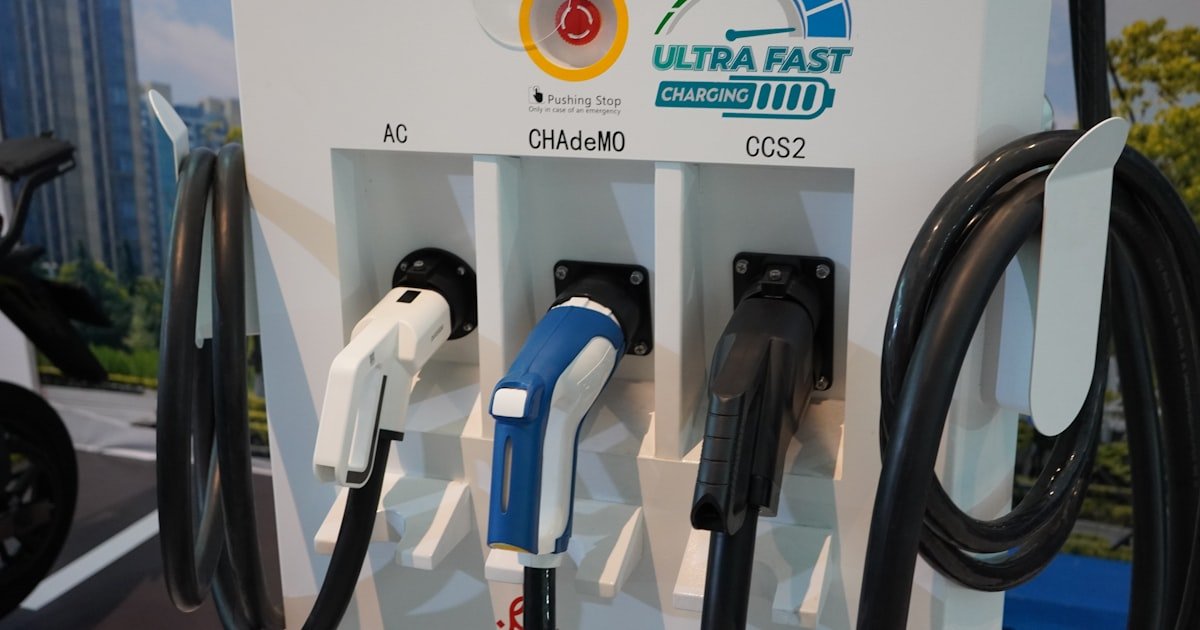
- Charger procurement: Install BIS-certified chargers complying with IS 17017 (AC charging) and relevant international standards. Chargers must support CCS2 and CHAdeMO protocols for DC fast charging
- Network registration: Register on the government's OCPI (Open Charge Point Interface) compliant network for interoperability and discoverability
- Safety compliance: Fire safety standards, proper earthing, electrical safety signage, and emergency disconnect switches
- Payment infrastructure: Integrate cashless payment options (UPI, cards) as per government guidelines
Battery Waste Management and EPR
The Battery Waste Management Rules, 2022 impose significant extended producer responsibility obligations on EV manufacturers and battery producers.
EPR Requirements
- Registration: Register on the CPCB's centralized EPR portal as a producer, importer, or recycler
- Collection targets: Meet progressively increasing collection targets for end-of-life batteries (up to 70% for lithium-ion by 2025-26)
- Recycler partnerships: Engage with authorized recyclers for proper processing of waste batteries
- Traceability: Maintain records of every battery from production to end-of-life, including serial numbers and customer details
- Labeling: Batteries must carry labels with chemistry type, rated capacity, producer identification, and recycling instructions
- Annual reporting: Submit annual EPR fulfillment reports to CPCB with collection, recycling, and recovery data
Tax Benefits and Financial Compliance
Tax Advantages for EV Companies
- GST at 5%: EVs and EV chargers attract the lowest GST rate, making EVs price-competitive with ICE vehicles
- Startup India tax holiday: 3-year income tax exemption under Section 80-IAC for DPIIT-recognized startups
- R&D deductions: Weighted deduction on R&D expenditure under Section 35 with DSIR recognition
- Accelerated depreciation: Higher depreciation rates on manufacturing equipment and R&D assets
- PLI incentives: 13% to 18% production-linked incentive on incremental sales for qualifying manufacturers
- Customs duty benefits: Reduced or nil customs duty on specific EV components imported for manufacturing
- State tax benefits: SGST reimbursement, stamp duty waiver, and other state-specific fiscal incentives
Maintain proper records with professional accounting services to claim all available tax benefits. For complex EV businesses with PLI claims and R&D deductions, Virtual CFO services ensure optimal tax planning.
Annual Compliance Calendar
| Compliance | Deadline/Frequency | Filing |
|---|---|---|
| Board Meetings | Min 4/year (max 120-day gap) | Board minutes and resolutions |
| AGM | By September 30 | AGM minutes |
| Financial Statements (AOC-4) | Within 30 days of AGM | MCA portal |
| Annual Return (MGT-7A) | Within 60 days of AGM | MCA portal |
| Income Tax Return | October 31 | ITR-6 |
| GST Returns | Monthly | GSTR-1, GSTR-3B |
| Director KYC | September 30 | DIR-3 KYC |
| Factory License Renewal | Annually (by December 31) | State labour department |
| SPCB Consent Renewal (CTO) | Before expiry | State pollution board |
| EPR Annual Report | As per CPCB schedule | CPCB EPR portal |
| PLI Milestone Report | Annually | DPIIT/DHI portal |
Conclusion
India's EV sector presents a once-in-a-generation opportunity for entrepreneurs and manufacturers. With government subsidies worth thousands of crores, a rapidly growing market, and strong policy support at both central and state levels, the economics of starting an EV business have never been more favorable.
However, success in the EV space requires meticulous attention to regulatory compliance. From CMVR type approvals and battery safety standards to environmental clearances and EPR obligations, the licensing requirements are complex but navigable with proper planning. The startups that invest in compliance from day one build the regulatory foundation needed for PLI incentives, FAME eligibility, institutional funding, and sustainable long-term growth.
At IncorpX, we help EV startups across India with company registration, Startup India recognition, intellectual property protection, GST compliance, and ongoing compliance management. Our team understands the unique challenges of the EV ecosystem and ensures your business is built on a solid legal and regulatory foundation from the start.







 Nebin Binoy